How to unclog a kitchen sink drain safely in Mount Pleasant, TX
A slow or backed-up kitchen sink is usually grease or food in the trap or branch line. Here is how to unclog a kitchen sink drain safely in Mount Pleasant, TX — and when to stop and call a plumber.
Summary: Kitchen sink clogs are almost always grease and food: cooking oil cools and coats the pipe, food sticks, and the drain slows a little more each week. The fix is usually straightforward, but the wrong approach can damage the trap, the disposal, or the branch line. Here is the safe order to work through, from simplest to most involved.
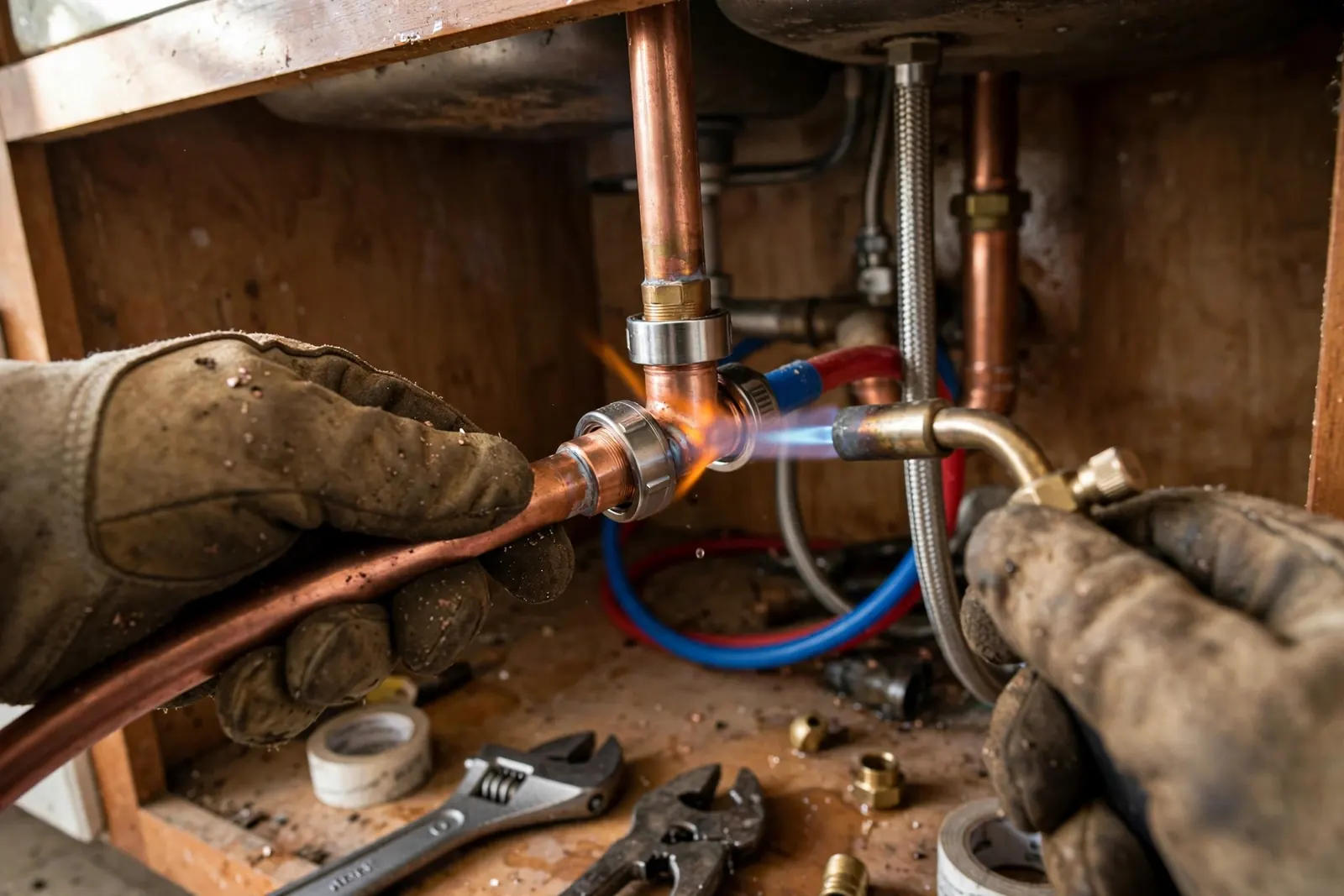
Kitchen sink clogs are almost always grease and food. Cooking oil cools and coats the pipe, food particles stick to the coating, and the drain slows a little more each week until water stands in the sink. The fix is usually straightforward — but the wrong approach can damage the trap, the disposal, or the branch line behind the wall.
Here is the safe order to work through, from simplest to most involved.
Unclog a kitchen sink drain safely: start with boiling water and a plunger
Boil a kettle and pour it slowly down the drain in two or three rounds, giving each round a minute to work. Hot water softens fresh grease near the trap. Follow with a cup plunger — the flat-bottomed kind, not a flange plunger — placed firmly over the drain opening. If you have a double sink, block the other drain with a wet cloth so pressure goes into the clog, not out the other side. Plunge with short, firm strokes for twenty seconds, then lift and check the flow.
If the water drops, run hot water for a minute to flush the loosened grease further down the line. If nothing changes after several rounds, move on — repeating the same step will not help.
Clean the trap by hand
The P-trap — the curved section of pipe under the sink — is where most kitchen clogs sit. Put a bucket underneath, unscrew the slip nuts by hand (or with a gentle turn of pliers), and let the water drain out. Clear the trap, check the short pipe into the wall, and reassemble. Run water and check every joint for drips before putting the bucket away.
Two cautions: do not overtighten the plastic slip nuts — hand-tight plus a small turn is enough — and do not do this if you have already poured chemical drain cleaner down the sink. The standing water in the trap may contain the chemical.
What not to pour down a kitchen drain
Chemical drain cleaners are the most common mistake. They generate heat and can warp plastic traps, damage disposal seals, and crack older porcelain. They also leave a caustic residue in the standing water, which is a hazard for anyone who opens the trap afterwards. Baking soda and vinegar are harmless but they do not clear a grease clog — the fizzing is cosmetic, and the mixture is mostly water by the time it reaches the blockage.
The other mistake is using a powered auger or a long cable without knowing what is downstream. A cable can punch through a pipe joint, damage a disposal, or get stuck in a bend. If the trap is clean and the drain is still slow, the clog is further down the branch line — that is the point to call us.
Keep grease out of the drain for good
Prevention is the only permanent fix for a kitchen drain:
- Never pour oil or fat down the drain. Let it cool, pour it into a container, and bin it.
- Wipe pans before washing. A paper towel takes off most of the grease before water ever touches it.
- Scrape plates into the trash. Rice, pasta, coffee grounds, and fibrous food swell or snag in the line.
- Run cold water with the disposal. Cold water keeps grease solid so the disposal can grind it and the flow can carry it away; hot water melts it into the pipe walls.
- Flush with hot water weekly. A kettle of hot water once a week keeps fresh grease from building into a lining.
If the disposal itself is jammed, humming, or draining slowly, the problem may be the unit rather than the pipe. Our garbage disposal repair service in Mount Pleasant, TX covers jams, leaks, and units that have stopped draining — and note that under Texas law, replacing a garbage disposal is one of the jobs that does not need a City permit.
When a kitchen clog is not a kitchen problem
Sometimes the kitchen sink is the symptom, not the cause. If the bathroom drains are slow too, or the toilet gurgles when the sink drains, the blockage is in the main line — and no amount of work under the kitchen sink will fix it. The same applies if the sink backs up every time the washing machine discharges. Read our guide to the signs your sewer line is clogged in Mount Pleasant, TX to tell the difference.
Repeated kitchen clogs in an older home can also mean the branch line itself is narrowed by scale or damaged by clay-soil movement. Homes in Southgate and downtown Mount Pleasant, TX often have 1970s-era kitchen lines where a camera inspection is worth more than a fourth round of plunging. Our drain cleaning service in Mount Pleasant, TX and sink repair service in Mount Pleasant, TX cover both the clog and the pipe behind it.
Get help with plumbing in Mount Pleasant, TX
Try the plunger and the trap first. If the drain is still slow, the clog is further down the line than a homeowner's tools can safely reach. Call NTP Plumbing at (903) 350-9085 — open 24 hours, Monday–Sunday.