Water softener repair in Mount Pleasant, TX that restores soft water
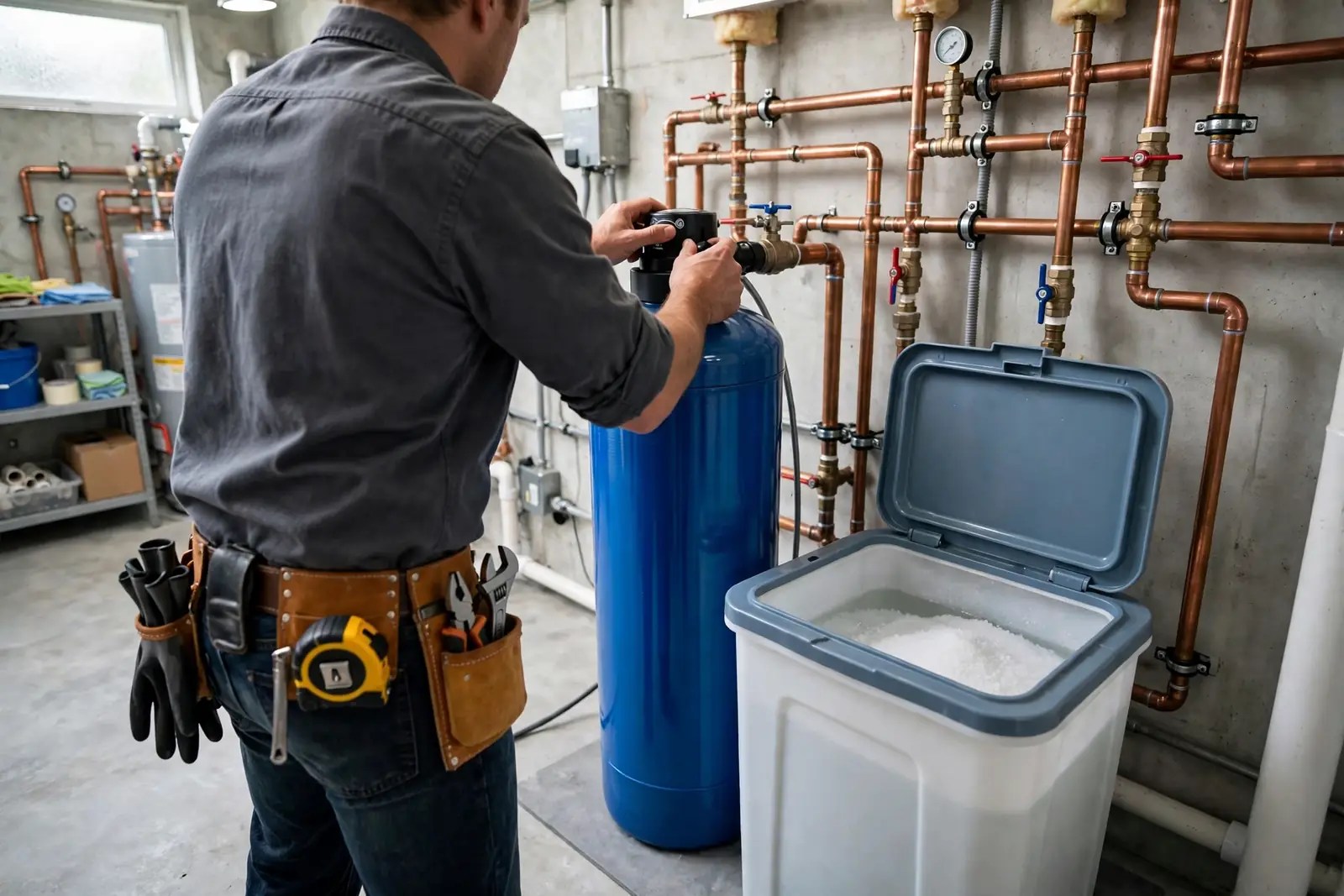
Water softener repair is the professional fixing of a water softener in a Mount Pleasant, TX home, from salt bridges to stuck regeneration. A softener that has stopped softening is usually one fault away from working again. NTP Plumbing repairs water softeners across Mount Pleasant, TX — salt bridges, stuck regeneration, and water that has gone hard again — and we test the water before and after. Open 24 hours, Monday through Sunday.
Test before quoteHardness and pressure checked first
Parts on truckCommon valves and seals stocked
Cycle runFull regeneration before we leave
Settings setSized to your household
What a water softener repair covers
Every repair call includes diagnosis, the mechanical fix, and verification that the water is actually soft again. Here's what's in the scope and what's quoted separately if it comes up.
Hardness testing
We test raw and treated water with a titration kit and check line pressure with a gauge. That tells us whether the unit is failing entirely or just underperforming.
Control valve service
We pull the valve, inspect the piston and seals, clean the injector screen, and replace worn parts.
Brine system check
Salt bridges, mushing, and stuck float valves get diagnosed and corrected. We confirm the brine draw pulls the right volume during a manual regeneration.
Regeneration cycle test
After the repair we run a full cycle and watch the drain line, brine refill, and backwash. A unit that cycles clean is a unit that will keep softening.
Settings adjustment
We set hardness, capacity, and regeneration frequency for your household size. Wrong settings cause premature failures, so this step matters as much as the part swap.
Post-repair water test
We re-test treated water at the tap and show you the reading. The job isn't done until the number confirms soft water.
Homes and rentals
The approach is the same for a home and a rental — water softener repair is checked the same way in both. What changes is the access, the schedule, and who needs the paperwork for a water softener repair job.
For homeowners
Your softener affects every tap, appliance, and water heater in the house. We test the water, find the fault, and confirm it's soft again before we leave.
Spotty dishes and stiff laundry
Softener leaking on the floor
Low pressure after the softener
For rentals and property managers
Rental units depend on working softeners to protect appliances and keep tenants happy. We test the water before and after the repair.
Multiple units on one schedule
Tenant complaints about hard water
Softener drain backing up
What water softener repair in Mount Pleasant, TX actually involves
A plain-language look at what Water Softener Repair involves and when it is needed. The City of Mount Pleasant charges a $75 residential plumbing permit fee where a permit is required (inside city limits) — that is a City fee, not our price.
Most softener repairs are one of three things: a salt bridge, where the salt has crusted into a shelf above the water and the unit has nothing to regenerate with; a regeneration cycle that has stuck or stopped running; or water that has gone hard again because the resin is fouled or the settings drifted. We find which one it is by testing the water and watching a cycle run.
The test matters here as much as on an install: Mount Pleasant, TX water comes from surface sources — Lake Bob Sandlin and Lake Cypress Springs — and no current, measured hardness figure exists for the city supply, so we test your water at your home rather than quoting a number. A softener that is repaired without a test is a softener that may still be set wrong.
A softener that stopped softening is telling you something. Test the water, then fix the fault.
What it is
Finding why a softener stopped softening — salt bridge, stuck regeneration, or fouled resin — and fixing it.
When you need it
Scale coming back, soap that will not lather, or a unit that has stopped regenerating.
What to expect
A water test first, the fault fixed, and a test after to prove the water is soft again.
What to expect on a repair call
Five steps from your first call to verified soft water.
Phone intake
We ask what the unit is doing: no regeneration, salty water, low pressure, or a leak at the base. We agree a time for the visit and explain what it covers.
Symptom check
Visit window
Unit details
On-site diagnosis
The technician tests raw and treated hardness, checks line pressure with a gauge, and cycles the unit through a manual regeneration. We inspect the brine tank for salt bridges and mushing, and pull the control valve to check the piston, seals, and injector screen. We complete the diagnosis on site before quoting the repair.
Hardness test
Pressure check
Valve inspection
Repair and parts
We replace what failed: brine valve, piston assembly, seals, timer motor, or a cracked bypass. Common parts ride on the truck. If a control board has to be ordered, we set the unit to bypass so you still have water and schedule the return.
Part replaced
Bypass set
Return scheduled
Verification
After the repair we run a full regeneration cycle and re-test the treated water. You see the hardness reading drop before we pack up. We also confirm the drain line runs clear and the brine tank refills to the right level.
Cycle run
Water re-tested
Drain checked
Settings and walkthrough
We set hardness, capacity, and regeneration schedule for your household size, then walk you through the salt level and what to watch for. You leave knowing how the unit should sound and cycle, so a future problem gets caught early.
Settings set
Salt level
Walkthrough
Tools and methods we use
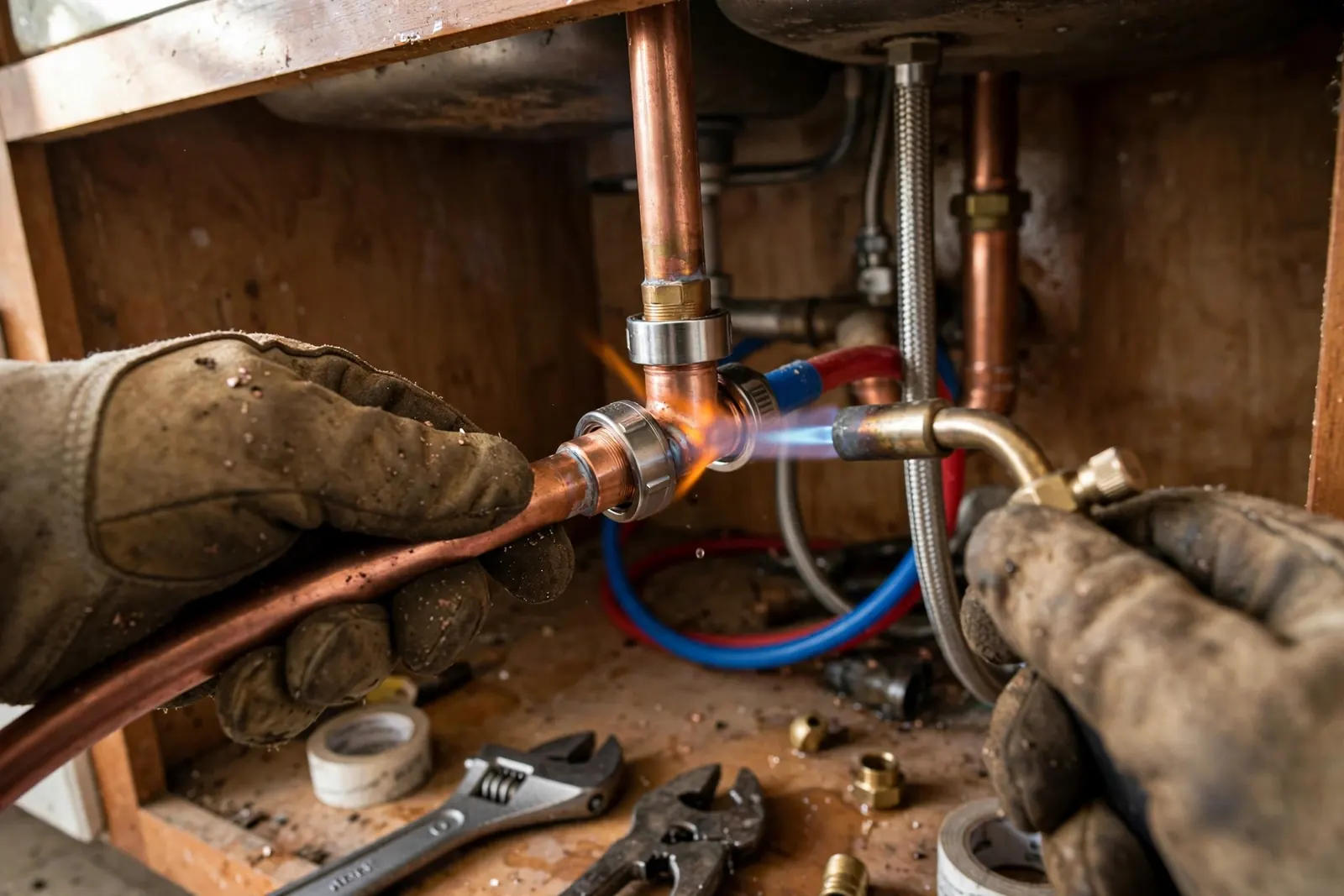
Move across a circle, or focus it and press Enter, for an illustrative thermal view of this water softener repair photograph.
Titration hardness test kit
Measures grains per gallon of hardness in raw and treated water so we know exactly what the softener is and isn't removing.
Pressure gauge
Checks line pressure before and after the softener to spot restrictions from a clogged resin bed or scaled valve.
Pipe wrench and PEX crimping tool
Used to break loose valve bodies and make clean connections when a fitting or bypass needs replacement.
Soldering torch and copper pipe
For sweat connections on copper supply lines when a softener fitting has to be rebuilt to code.
push-to-connect and expansion fittings
Push-to-connect and expansion fittings for fast, reliable repairs where soldering isn't practical.
Thermal views are illustrative, generated from photographs of water softener repair work in Mount Pleasant, TX.
Methods
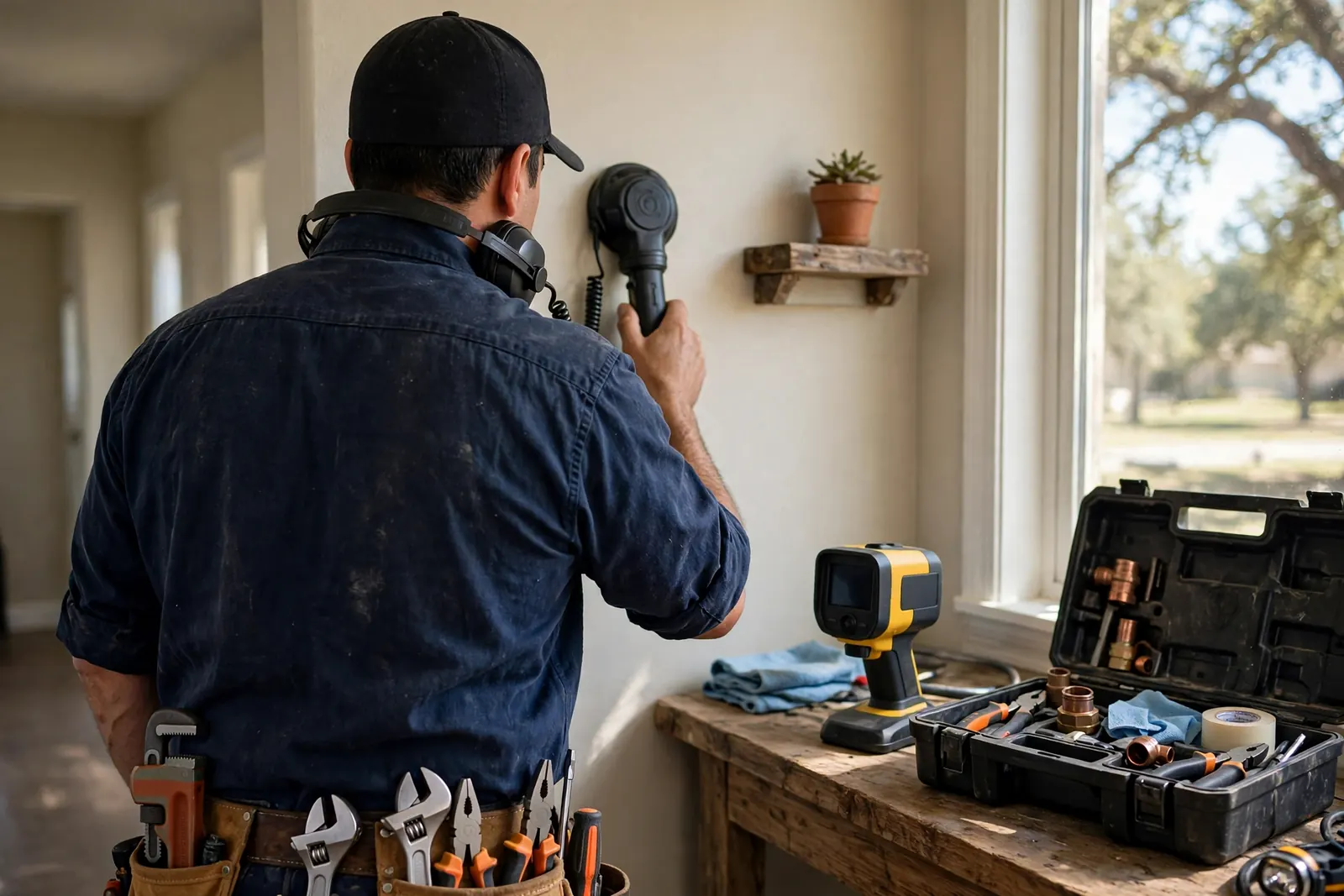
Leak detection microphone
Finds hidden leaks behind walls or under slabs when a softener leak isn't visible at the unit.
Sewer camera
Checks the drain line when softener discharge is backing up, so we know whether the clog is in the softener drain or the main line.
Manual regeneration cycle test
We force the unit through backwash, brine draw, rinse, and refill while watching drain flow and brine level. This catches failures that only show up mid-cycle.
Brine draw measurement
We measure how much brine the unit pulls during regeneration. Low draw points to a clogged injector or failing valve; high draw points to a stuck brine valve.
Resin bed inspection
We check resin condition and bed depth. Exhausted or fouled resin can't be fixed with a part swap, and we tell you when that's the case.
2024 International Plumbing Code adopted by the City of Mount Pleasant (Ordinance 2026-2, effective 20 January 2026) compliance for water softener repair work
Every repair and install follows the 2024 International Plumbing Code for backflow protection, drain connections, and bypass valving, so the work passes inspection and protects the water supply.
When to call for softener service
Salt bridge
The softener stopped softening and the salt level never drops.
A salt bridge had crusted over the brine. We broke it, checked the tank, and ran a regeneration cycle.
Outcome: Soft water again, with the tank checked.
Stuck regeneration
The unit has not regenerated in weeks and scale is back.
The timer had stuck. We freed the cycle, reset the schedule to the test result, and watched a full regeneration run.
Outcome: A unit regenerating on schedule again.
Hard water creeping back
Scale slowly returning on faucets and the showerhead.
The resin was fouled. We cleaned it, tested the water, and the softening was back.
Outcome: Fixtures staying clean again.
Settings drifted
The softener runs, but the water never feels soft.
The settings had drifted from the original test. We re-tested the water and set the unit to the result.
Outcome: A softener set to the water it actually serves.
Drain leak
Water pools under the softener after regeneration.
The drain connection was weeping. We resealed it and checked the backflow protection.
Outcome: A dry floor and a drain that holds.
DowntownSouthgateNorthwood
How water softener repair runs in Mount Pleasant, TX
Softener repairs happen wherever softeners are: Downtown homes and Southgate ranches with older units, and newer Northwood and Stone Briar homes where the unit is newer but the settings have drifted. Salt bridges are the most common call, and they are a maintenance fault, not a broken unit.
Homes on rural water — Tri-County Special Utility District customers and well-water homes outside the city — need the test more, since the supply is not the city system. For the water-bill side of things, our post on how to lower your water bill with simple plumbing fixes covers the checks that cost nothing before you call us about water softener repair.
Downtown Mount Pleasant, TX: Early-to-mid-20th-century homes with older softeners. Salt bridges and stuck regeneration are the usual repair.
Southgate: 1970s brick ranches where the softener is often as old as the kitchen. Settings drift and resin fouling are common here.
Northwood and Stone Briar: Newer north-side subdivisions, where water softener repair work is usually on newer systems. The unit is usually newer, and the fault is a setting that drifted or a bridge that formed.
Rural and coop water: Tri-County Special Utility District customers and well-water homes outside the city need softener repairs that account for their supply. The test matters more here, since the supply is not the city system.
Salt bridges: Salt crusts into a shelf above the water and the unit has nothing to regenerate with. We break the bridge and check the brine tank.
Water gone hard again: Scale coming back means the softener is not regenerating or the resin is fouled. We test the water and find which it is.
We test hardness and pressure, then cycle the unit.
We lay drop cloths and protect the utility area.
We re-test the water and explain the settings.
From problem to finished result
Example — a typical call. The stories below are illustrative examples of the kind of softener calls we take, not a record of a specific past job.
IllustrativeThe thermal view for this water softener repair job is generated from the photograph. It is not a measurement. Drag the handle to compare the before and after on this water softener repair job, or use the arrow keys once it is focused.
Salt bridge cleared, soft water restored
Before: A Northwood homeowner had hard, spotty dishes for three weeks. The softener was cycling but not drawing brine. The brine tank had a solid salt bridge an inch below the surface, and the injector screen was clogged.
After: We broke the bridge, cleaned the injector screen, and ran a full regeneration. The water was soft again. The dishes came out clean on the next cycle.
Check the salt level monthly and break up any crust before it hardens.
Bypass fitting replaced, floor dried
Before: A Southgate homeowner found water pooling around the softener base. The tank was fine, but the brass bypass fitting had cracked from corrosion and was dripping steadily onto the floor.
After: We replaced the bypass fitting with a new brass unit, pressure tested the connection, and ran a cycle to confirm no leaks. The floor stayed dry and the unit returned to normal service.
We check the bypass and fittings on every service call. If yours is original brass, have it inspected before it fails.
Valve rebuilt, pressure back to normal
Before: A Cedar Ridge home had low shower pressure and a softener that ran constantly. The piston in the control valve was scored and the seals were worn, so the unit never fully cycled out of backwash.
After: We rebuilt the valve with a new piston and seal kit, set the regeneration schedule, and re-tested pressure at the fixtures. Shower pressure came back to normal and the unit cycled normally.
Annual valve service and a hardness test keep this from recurring. We note the valve model on the ticket so the next service is faster.
Common softener problems we solve
Most failures show up as one of these symptoms. We diagnose which one you're dealing with before quoting a repair.
Not regeneratingSoftener not regenerating on scheduleThe resin bed exhausts and hard water passes straight through. Scale builds in the water heater and fixtures within weeks. We test the timer motor, piston, and brine draw, then replace the failed component. A full cycle test confirms the unit regenerates on schedule again before we leave.
Salty waterSalty taste or slick feeling waterToo much brine is being drawn or the resin isn't rinsing properly. It can also mean the brine valve is stuck open. We check the brine valve, injector, and rinse cycle. Most cases trace to a stuck valve or a bad seal, and the fix restores normal taste within one regeneration.
Leaking baseWater softener leaking at the baseA leak can flood a utility room or warp flooring. It often points to a cracked tank, a failed O-ring, or a loose fitting. We isolate the leak, repair the fitting or O-ring, and pressure test. If the tank itself is cracked, we quote a replacement and set the old unit to bypass so you keep water.
Low pressureLow water pressure after the softenerA clogged resin bed or scaled valve restricts flow to the whole house. Shower pressure drops and appliances run slow. We check pressure before and after the unit, inspect the resin for fouling, and clean or replace the restricted component. Pressure is re-tested at the fixtures after the repair.
Runs but hardUnit runs but water stays hardThe softener cycles and drains but the resin isn't exchanging. That usually means exhausted resin or a bypass stuck open. We test hardness at multiple taps and check the bypass valve position. If the resin is spent, we tell you straight and quote replacement rather than selling a repair that won't work.
Why fix it instead of living with hard water
Soft water back, appliances protected, and a verified reading before we leave.
Protects your water heater
Scale insulates the heating element and shortens tank life. Restoring soft water can add years to a water heater and cut the popping and rumbling that comes with heavy buildup. We check the softener and the heater together so you're not chasing the same symptom twice.
Cleaner dishes and laundry
Hard water leaves film on glassware and stiffens towels. Once the unit regenerates properly again, detergent works like it should and you use less of it. Most customers notice the difference in the first wash cycle after a water softener fix Mount Pleasant visit.
Stops scale at the fixtures
White crust on faucets and shower heads is the visible end of scale that's also inside your pipes. Fixing the softener early keeps that buildup from choking supply lines and clogging aerators. We test hardness at multiple taps to confirm the whole house is covered.
Avoids an unnecessary replacement
A failed brine valve or a cracked piston isn't a dead softener. We diagnose first, quote the repair, and only recommend replacement when the resin bed or tank is genuinely shot.
What you receive with water softener repair
Clear records from your water softener repair job that you can keep and share.
Test log
Hardness readings before and after
Parts list
What was replaced and why
Settings sheet
Hardness and regeneration schedule
Service note
What to watch for next
Repair vs replace: what the difference means
A softener fails in two ways: a mechanical part breaks, or the resin and tank wear out. The first is repairable; the second usually isn't.
Mechanical fault
A valve, seal, or control has failed
Brine valve stuck
Piston scored
Seal kit worn
Resin failure
The resin can no longer exchange hardness
Exhausted resin bed
Iron-fouled resin
Reduced capacity
Tank failure
The pressure vessel itself is compromised
Cracked tank
Leaking base
Corroded fittings
What we work with
Brine valves
Seal kits
Pistons
Injector screens
Copper pipe
PEX tubing
Service ZIP codes
A list like this tells people straight away whether we cover their street for water softener repair. Not listed? Call and ask — it only takes a minute.
Excellence service and diagnosis with courtesy and understanding of the whole issue. Went well beyond the norm to assist whereby I was able to resolve the problem. Especially considering it was a Saturday morning service call Thank you so much for your expert advice. Hot water again, yeah!!!
The service I received from NTP Plumbing in April was Absolutely EXCEPTIONAL! The technician/plumber name was Jeremy. He took care of my pipe issues efficiently and treated me like I was family. Jeremy had excellent customer service/interpersonal skills and he made sure the work done was in the spirit of excellence. I would be remiss if I didn't mention the wonderful service I received from the owner, James. He was so welcoming and genuinely kind. James was able to get me scheduled in so that my plumbing would be taken care of in a timely manner. Thank you NTP Plumbing for all you do and especially for the things I don't see.
I recently used NTP for a clogged kitchen drain. The job took longer than anticipated but James honored his quote and the work is guaranteed for 30 days. I would highly recommend NTP for any plumbing needs you may have.
This review is about a used-appliance sale, a separate line of business — not plumbing work.
They sell used appliances as well, fyi they r super nice ND very great prices! They delivered my fridge same day we're quick and nice. Thank y'all so much for being so efficient!!
They were very professional and courtious. Fixed all my plumbing problems
4.8 out of 5 from 16 Google reviews — 15 five-star and 1 one-star. Read all reviews for NTP Plumbing on Google.
Frequently Asked Questions
Usually a salt bridge, a regeneration cycle that has stopped, or resin that has fouled. We test the water and watch a cycle run to find which one it is.
Salt crusts into a hard shelf above the water in the brine tank, so the unit has nothing to regenerate with. We break the bridge, check the tank, and test the water after.
Listen for it overnight, and watch for scale coming back on fixtures. If the water has gone hard, the unit is not regenerating properly — we test and find out why.
Yes, before and after. Mount Pleasant, TX water comes from surface sources and no current hardness figure is published for the city supply, so the test at your home is what the repair is judged by.
Call (903) 350-9085 any time — NTP Plumbing is open 24 hours, Monday–Sunday. Tell us what you are seeing and we will talk you through shutting the water off if you need to. We serve Mount Pleasant, TX, including ZIP codes 75455 and 75456. If you are outside Mount Pleasant, call to confirm we can reach your address.