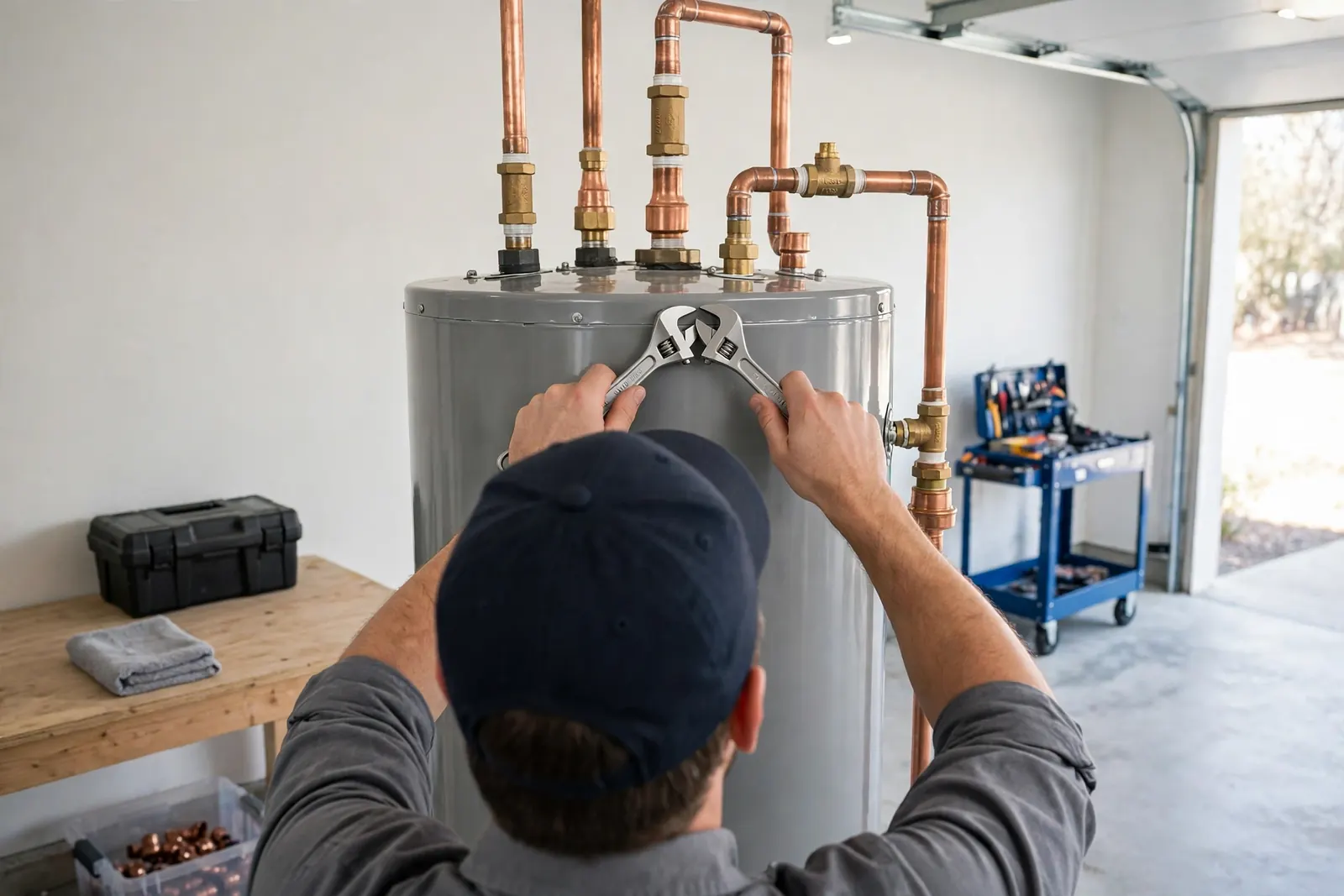
For homes
Hard water shows up on your glass, your dishes, and your water heater. We test, size, and install a system that fits your household.
- Scale on shower glass
- Water heater popping
- Spotty dishes and stiff laundry
Water softener installation is the professional fitting of a water softener in a Mount Pleasant, TX home, sized after testing the water. A softener should be sized to your water, not to a guess. NTP Plumbing installs water softeners across Mount Pleasant, TX, and every job starts the same way: we test your water first, then size and fit the system to what the test shows. Open 24 hours, Monday through Sunday.
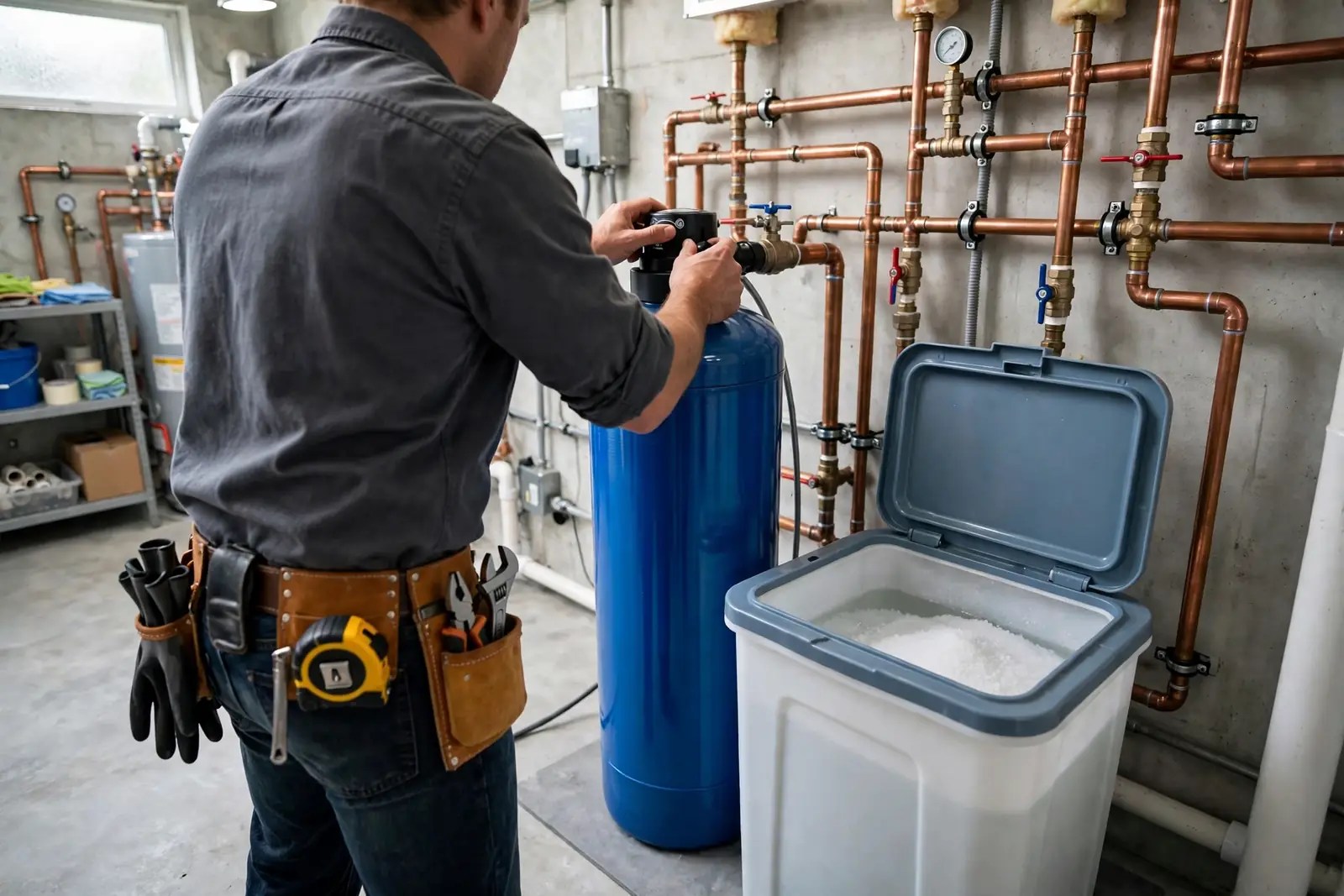 Water testedSized to fitInstalled to code
Every install starts with a water test and ends with a working system and a walkthrough. Here's what's covered in a typical residential job, and what we quote separately if your setup calls for it.
We test raw water at an outdoor spigot for hardness, iron, and pH. Those numbers drive tank sizing and whether a pre-filter is needed. No test, no accurate quote.
We cut in a bypass with new shutoff valves so you can isolate the softener for service without killing water to the whole house. Built with copper, PEX, or push-to-connect depending on your lines.
The resin tank and brine cabinet get set level on a stable surface, plumbed to the bypass, and connected to a proper drain discharge point. We check clearances so salt loading stays easy.
We set hardness, capacity, and regeneration schedule to your numbers, then run a full manual regeneration and check every fitting under pressure before we leave.
The regeneration discharge gets run to an approved drain with a proper air gap, so wastewater can't back-siphon into your supply. Code-correct, not improvised.
You get a hands-on lesson on salt level, bypass operation, and what a normal regen sounds like, plus the manufacturer's manual and our number for follow-up.
Every softener install starts with a test of your water, and the sizing follows the result — the same in a home and a rental. What changes is the access, the schedule, and who needs the paperwork for a water softener installation job.
Hard water shows up on your glass, your dishes, and your water heater. We test, size, and install a system that fits your household.
Scale costs money in equipment life and service calls. We install and maintain softeners for rental homes, and we test the water first.
A plain-language look at what Water Softener Installation involves and when it is needed. The City of Mount Pleasant charges a $75 residential plumbing permit fee where a permit is required (inside city limits) — that is a City fee, not our price.
See how it worksMount Pleasant, TX water comes from surface sources — Lake Bob Sandlin and Lake Cypress Springs — and no current, measured hardness figure exists for the city supply. That is why we test your water first: the test tells us what the system needs to do, and the softener is sized from the result, not from a number on a website.
Installation means setting the unit on the main supply line, connecting the drain and the overflow, and setting the regeneration cycle to the test result. The signs that bring people to us are the honest ones: white scale on faucets and showerheads, cloudy glassware, and soap that will not lather. Work follows the 2024 International Plumbing Code adopted by the city, and the drain connection is checked for backflow protection.
We test your water first. A softener sized to a guess is a softener sized wrong.
Every job follows the same sequence so you know what's happening and when. We don't leave until the system has regenerated once and tested clean.
We test raw hardness, iron, and pH at an outdoor spigot before quoting anything. Grains-per-gallon and iron content decide the tank size and resin volume. Skipping this step is why some systems never keep up.
We match the unit to your household count and peak demand, then confirm the placement works with your existing shutoff valves and electrical. You get the model and capacity, and a quote, before we cut a single line.
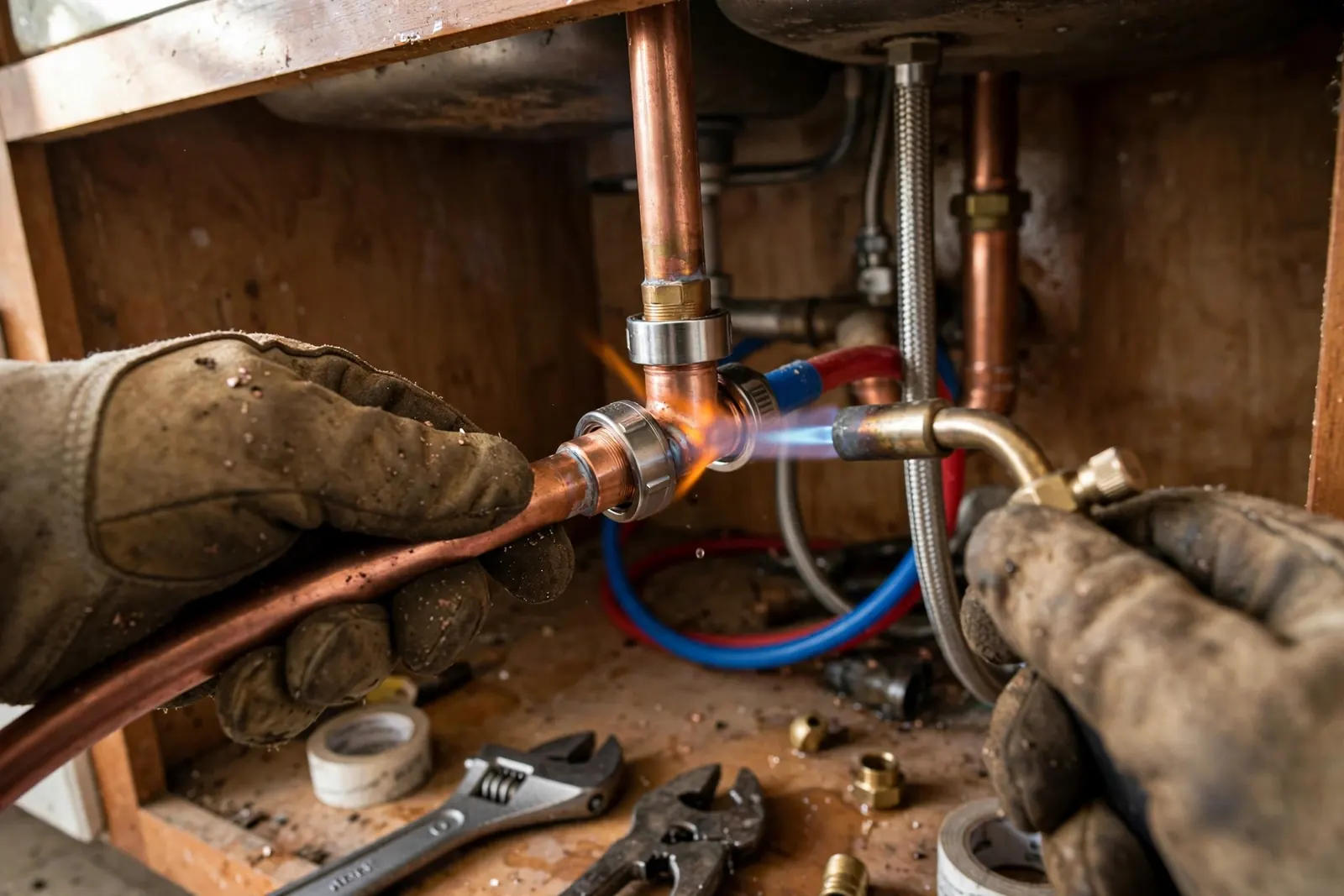
Water gets shut off at the main, and we cut in a bypass loop with a pipe cutter and PEX crimping tool or soldering torch, depending on your material. The tank and brine cabinet get set level, and the drain line runs to a proper discharge point.
We set hardness, regeneration schedule, and reserve capacity on the control head, then run a manual regeneration cycle and check for leaks at every fitting with a pressure gauge. This is the step that catches a bad connection before it becomes a wet floor.
You get a hands-on lesson on the bypass valve, salt level, and what a normal regen sounds like. We leave the manual and our number. If anything reads wrong, call and we will talk through the next step with you.
Move across a circle, or focus it and press Enter, for an illustrative thermal view of this water softener installation photograph.
Makes secure, code-compliant connections on PEX tubing runs to the softener and bypass loop.
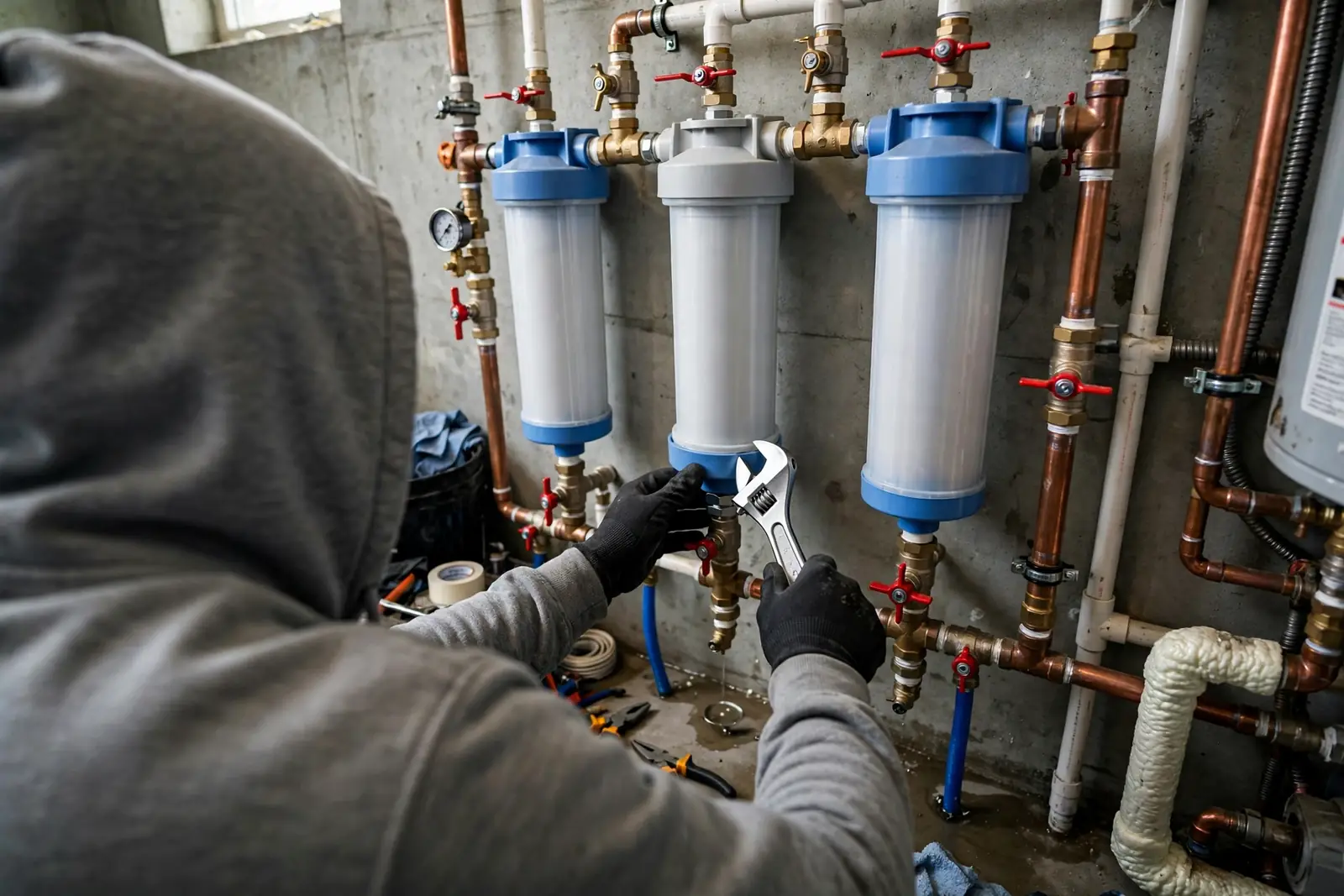
Used on copper pipe tie-ins where a soldered joint is the right call for durability and pressure.
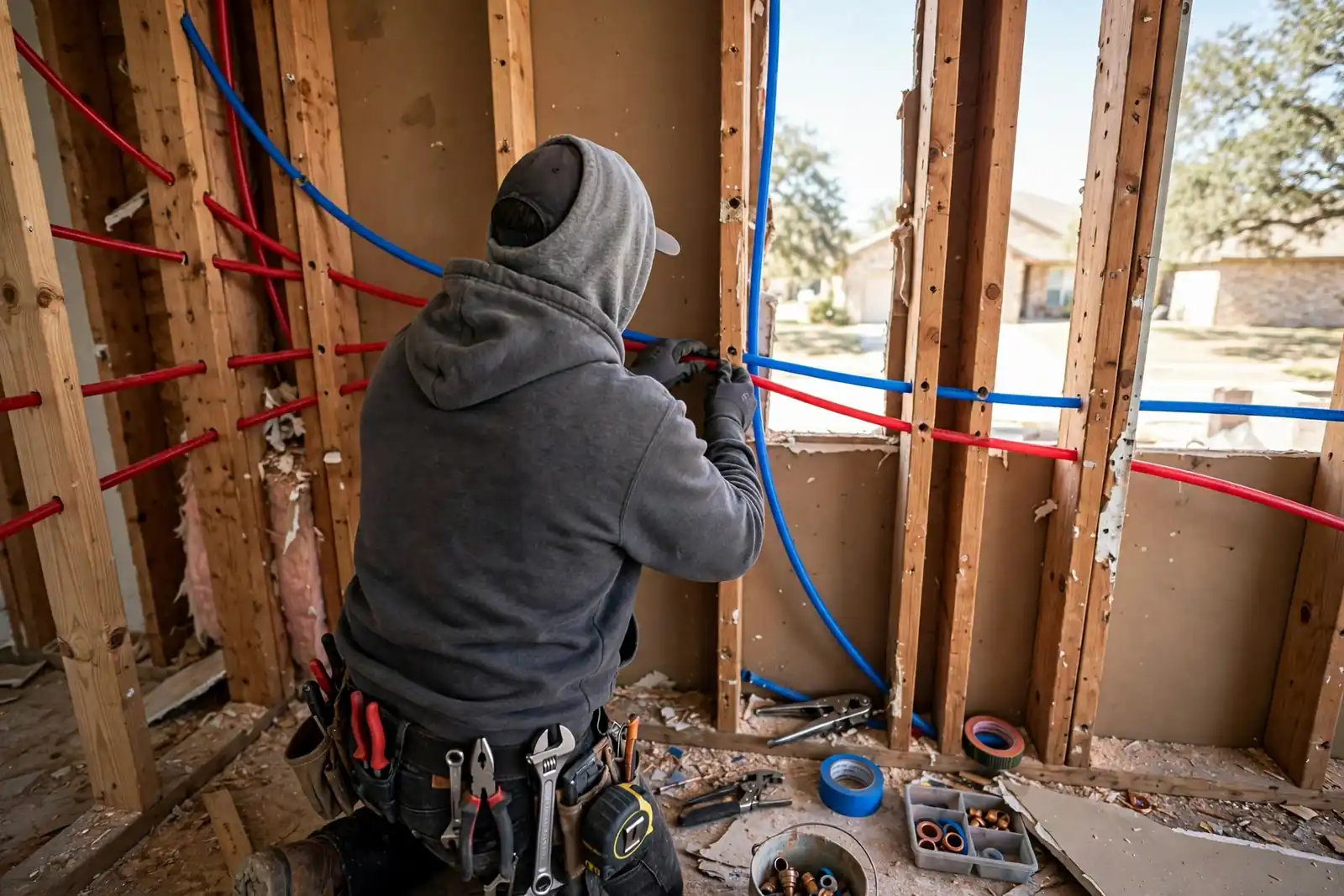
Cuts copper and PEX cleanly so the tie-in is square and the joint seals first time.
Confirms system pressure and checks for leaks at every fitting after the install and regeneration test.
Finds hidden leaks in walls or under slabs if a softener install reveals a pressure drop.
Thermal views are illustrative, generated from photographs of water softener installation work in Mount Pleasant, TX.
Push-to-connect fittings for fast, reliable tie-ins where soldering isn't practical or safe.
We test raw water before sizing anything. Grains per gallon and iron content decide tank capacity and whether a pre-filter is needed. This is the step that separates a system that works from one that runs constantly and never catches up.
Every tie-in, drain line, and air gap follows the 2024 International Plumbing Code. That means proper backflow protection, approved materials, and a bypass that isolates the unit for service without shutting down the house.
Before we leave, we run a full regeneration cycle and watch every fitting under pressure. If a connection weeps or the drain line backs up, we catch it on the install day, not a week later.
We build a bypass with new shutoff valves so future service or replacement is a quick job instead of a full drain-down. Copper, PEX, or push-to-connect depending on what your lines are made of.
White scale builds up on every faucet and showerhead.
We tested the water first, then sized and fitted a softener to the result. The drain was connected with backflow protection.
Outcome: Fixtures that stay clean, with a system sized to the actual water.
A new water heater going in on water that scales.
We tested the water, fitted a softener on the main line, and the heater went in after it.
Outcome: A new heater protected from build-up.
Glasses come out of the dishwasher cloudy every time.
The test showed the water needed softening. We fitted the system and the glassware cleared up.
Outcome: Clear glassware and soap that lathers properly.
A home on coop water with scale on everything.
The supply was not the city system, so the test mattered more. We sized the softener to that test, not to a city figure.
Outcome: A system matched to the water at that address.
Softener installs happen across the whole city, but the reasons differ. In Downtown homes and Southgate ranches with older plumbing, scale builds up on fixtures that are already worn; in newer Northwood and Stone Briar homes, the ask is usually protecting new fixtures and a new water heater from build-up. Either way, the job starts with a test.
Homes on rural water — Tri-County Special Utility District customers and well-water homes outside the city — are a different case again, and the test matters even more there, since the supply is not the city system. For the water-bill side of things, our post on how to lower your water bill with simple plumbing fixes covers the checks that cost nothing before you call us about water softener installation.
Example — a typical call. The stories below are illustrative examples of the kind of softener installation calls we take, not a record of a specific past job.
Before: A Northwood family of five was fighting white scale on shower glass and replacing faucet aerators every year. The water heater was popping and the dishwasher was spotting everything.
After: We installed a system sized to the test, with a new bypass. After the install, glass cleaned with a rinse and the heater stopped popping.
Check salt every four to six weeks, keep the brine cabinet about half full, and schedule a resin check every few years.
Before: A Southgate homeowner's old unit ran but wasn't softening. The control valve was sticking and the resin was exhausted. Hard water had already cost them one water heater.
After: We confirmed repair wasn't worth it, quoted a replacement with a new bypass and drain line, and installed it. Old unit hauled off, new system regenerating on schedule.
Salt checks monthly, an annual valve inspection, and a resin replacement around the 10-year mark.
Before: A new build had no softener loop planned, and the homeowner wanted soft water from move-in without cutting into finished walls later.
After: We roughed in the bypass and drain during construction, then set and commissioned a unit sized to the test after final plumbing. Soft water at every tap from move-in.
Keep salt level up, run a manual regen every few months if the house sits empty, and have the valve serviced annually.
Most customers call us after living with the symptoms for a while. These are the ones we hear about most in Mount Pleasant, and what a properly sized system does about them.
What changes once the system is running: less scale on everything the water touches.
Hard water fights your detergent. Once a system is running, most households use less soap and shampoo and still get more lather. Laundry comes out softer, dishes dry without spotting, and you stop buying descaling products for the coffee maker.
Scale is the quiet killer of water heaters, dishwashers, and washing machines. A softener keeps calcium from baking onto heating elements, which protects the appliances you already have.
Faucet aerators, showerheads, and glass doors stop collecting that white crust. Cleaning goes faster because you're rinsing film, not chipping mineral deposits. If you've been fighting hard water buildup on a kitchen faucet, this is the end of it.
Mineral scale narrows pipe interiors over time, especially in older copper pipe. Soft water slows that narrowing and protects the flow you already have. If low water pressure has been creeping up on you, we check the lines during install and flag anything that needs attention.
Clear records from your water softener installation job that you can keep and share.
Hardness and iron readings
Model, capacity, and settings
How to isolate the unit
Manufacturer documentation
Not every system removes hardness. Ion exchange does; salt-free conditioners only change how minerals behave.
Removes calcium and magnesium from the water
Conditions minerals without removing them
Removes iron and sediment ahead of the softener
Where we install softeners — if your street is not listed, call and ask.
Based in Mount Pleasant and covering the places around it. Pick one for local details.
It depends on your water, and the only way to know is a test. The signs are white scale on faucets, cloudy glassware, and soap that will not lather. We test your water first and recommend from the result — we do not sell a softener on a guess.
There is no current, measured hardness figure published for the city supply, so we do not quote one. Mount Pleasant, TX water comes from surface sources — Lake Bob Sandlin and Lake Cypress Springs — and your water is tested at your home before any system is sized.
On the main supply line, usually where the water enters the house — often the garage or a utility room. It needs a drain connection and power, and we check both before we start.
Yes. The unit discharges during regeneration, and the drain connection needs backflow protection under the code. We set that up as part of the install.
Other services from the same team.
Call (903) 350-9085 and tell us what your water is doing. We will test it first, then size the system to the result. Open 24 hours, Monday–Sunday.
Call (903) 350-9085 any time — NTP Plumbing is open 24 hours, Monday–Sunday. Tell us what you are seeing and we will talk you through shutting the water off if you need to. We serve Mount Pleasant, TX, including ZIP codes 75455 and 75456. If you are outside Mount Pleasant, call to confirm we can reach your address.