When to schedule water heater maintenance in Mount Pleasant, TX
A water heater does not ask for much — an annual flush, an anode check, and a look at the valves. Here is when to schedule water heater maintenance in Mount Pleasant, TX, and the signs you have waited too long.
Summary: Most water heaters fail quietly: sediment builds, the anode rod wears down, a valve starts to weep — and none of it shows until the hot water runs out or water appears on the floor. Maintenance catches those things while they are still cheap. This guide covers timing: when in the year, how often, and what the visit should include.
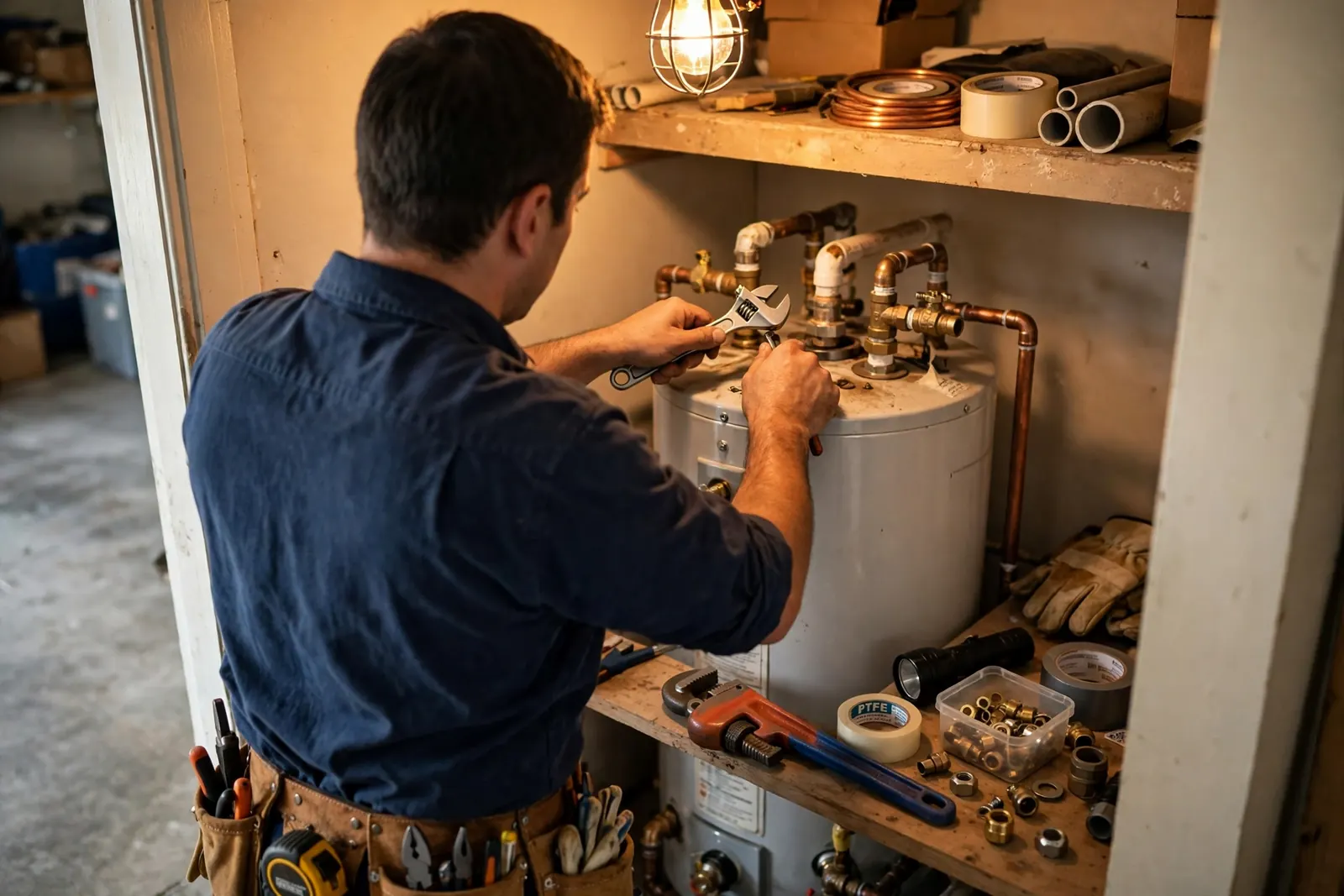
Most water heaters fail quietly. Sediment builds in the bottom of the tank, the anode rod wears down, a valve starts to weep — and none of it shows until the hot water runs out, the tank starts popping, or water appears on the floor. Maintenance is what catches those things while they are still cheap.
This guide covers timing: when in the year, how often, and what the visit should include for a Mount Pleasant, TX home.
Water heater maintenance: the annual visit and what it covers
Once a year is the right interval for a tank water heater. The visit should cover:
- Flushing sediment. Draining the tank removes the sediment that settles on the bottom, where it insulates the water from the burner or element and makes the tank work harder. Popping or rumbling sounds are sediment boiling — a sign the flush is overdue.
- Anode rod check. The sacrificial rod absorbs corrosive elements so the steel tank does not. Once it is used up, the tank starts corroding. Checking it yearly and replacing it when it is worn is the cheapest way to extend tank life.
- T&P valve test. The temperature-and-pressure relief valve is the safety device. It should lift and reseat cleanly; a valve that weeps or sticks needs replacing.
- Expansion tank check. Where the system is closed by a pressure-reducing valve, check valve, or backflow preventer, the expansion tank absorbs pressure as water heats. A waterlogged expansion tank is a common cause of a weeping T&P valve.
- Shut-off valve and connections. The water shut-off, the gas valve or breaker, and the inlet and outlet fittings should be checked for drips and corrosion.
- Drain pan and drain line. Where a pan is fitted, it should be clear and draining — a blocked pan drain hides a leak until the floor is damaged.
No published hardness figure exists for Mount Pleasant, TX water, so we test your water first rather than quoting a number — and the descaling interval for a tankless unit depends on that test, not on a fixed schedule.
The best time of year to book
Autumn is the best time. A maintenance visit in October or November gets the heater ready for the season when it works hardest — colder incoming water in winter means longer heating cycles and more demand on the tank. It also catches freeze exposure before the first hard freeze: Mount Pleasant, TX sees roughly 50 to 60 freezing nights a year, and a water heater in an unheated garage needs its lines and fittings checked before the cold arrives.
Spring is the second-best time, especially after a winter where the heater worked hard. Avoid waiting until the heater fails — a maintenance visit is a planned hour, while a failed tank is an unplanned day without hot water and a permit to replace it. Read our guide to preventing frozen pipes in a Mount Pleasant, TX winter for the freeze-preparation side of the same visit.
Signs you have waited too long
Book a visit now, not at the next annual date, if you notice any of these:
- Rusty or discoloured hot water. Corrosion inside the tank or in the lines feeding it.
- Popping, rumbling, or banging. Sediment boiling on the bottom of the tank.
- Hot water runs out faster than it used to. Sediment has reduced the tank's effective capacity, or an element or burner is failing.
- Water at the base of the tank. See our guide to a water heater leaking from the bottom in Mount Pleasant, TX — a tank leak means replacement, not maintenance.
- A weeping T&P valve. The valve is passing, or the expansion tank has failed.
- A rotten-egg smell in hot water only. Bacteria reacting with the anode rod — a water-quality question that starts with a test.
Age is the other trigger. A tank past ten years old deserves a maintenance visit and an honest conversation about replacement planning — not because it will fail tomorrow, but because a planned replacement beats an emergency one. Our water heater repair service in Mount Pleasant, TX covers the maintenance visit itself, and our water heater installation service in Mount Pleasant, TX covers the replacement when the time comes.
Tankless maintenance is different
A tankless unit has no tank to flush and no anode rod, but it needs periodic descaling. How often depends on your water test: with harder water, about once a year; with softer water, every couple of years. The inlet filter should be cleaned at the same time, and the venting and condensate drain checked. A tankless unit that has never been descaled will lose flow and efficiency gradually — the decline is easy to miss until the hot water temperature starts swinging.
Our comparison of tankless vs tank water heaters for Mount Pleasant, TX homes covers the maintenance difference in full. Homes in Stone Briar and Northwood, with their newer heaters and larger primary suites, are the ones where a first maintenance visit in the first year is worth the most — it sets the baseline for everything after.
Permits and access for replacement work
Maintenance itself does not need a permit. Replacement does: replacing a water heater in Mount Pleasant, TX is plumbing work that requires a permit from the City of Mount Pleasant, TX, and the work follows the 2024 International Plumbing Code adopted under Ordinance 2026-2, effective 20 January 2026. If the heater is in an attic, the City's rules require a passageway at least 30 inches high by 22 inches wide, solid flooring at least 24 inches wide, and a level service space at least 30 by 30 inches — worth knowing before a replacement is booked, because access that does not meet the rule has to be put right first.
Get help with plumbing in Mount Pleasant, TX
Book the annual visit in autumn, before the heater works its hardest. If you have noticed rust, popping, or water at the base, book it now. Call NTP Plumbing at (903) 350-9085 — open 24 hours, Monday–Sunday.